A total of 48 patients aged 2–32 years (40 children and 8 adults) with a confirmed diagnosis of ARG1-D have received Loargys in clinical studies. Patients included in the Loargys clinical studies have received treatment for up to approximately 4 years.1-3
The Loargys clinical development program included the first-ever randomised, controlled Phase 3 clinical study in ARG1-D, the Pegzilarginase Effect on Arginase 1 deficiency Clinical Endpoints (PEACE) study.3
Out of 32 patients included in PEACE, 17 were from Europe.
PHASE 3 EFFICACY RESULT
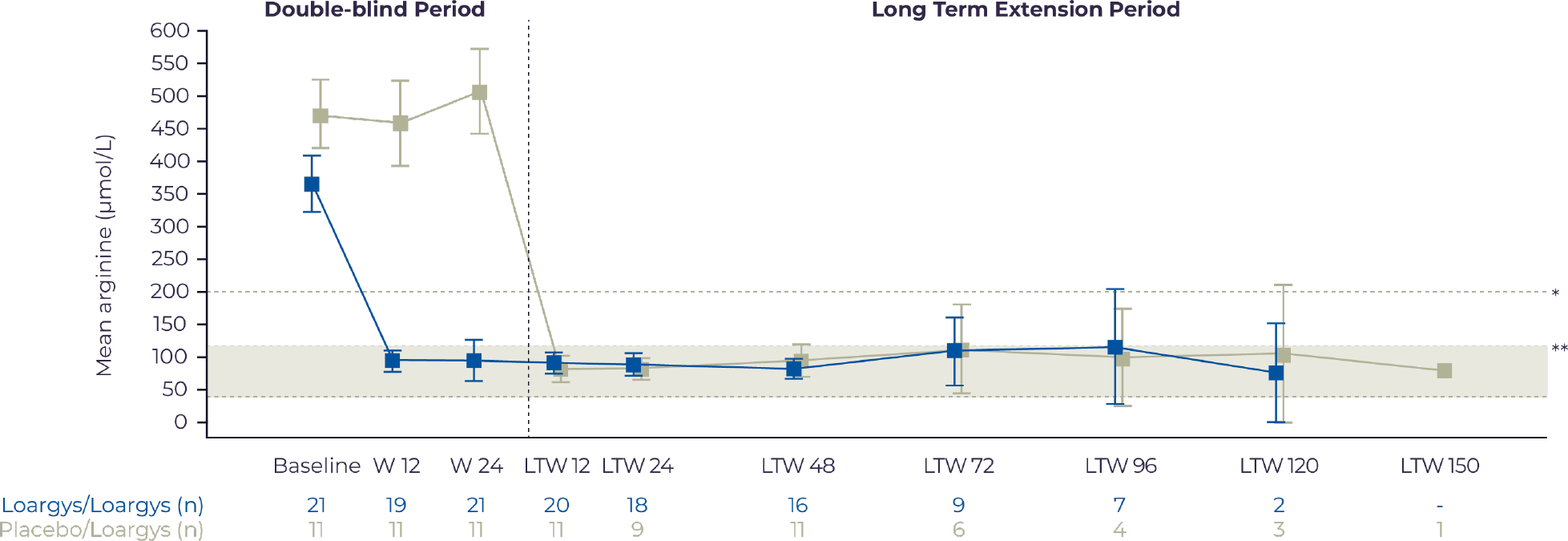
Loargys sustained normal plasma arginine levels for up to 152 weeks3,5
* Treatment guideline plasma arginine; 200 μmol/L. ** Normal range plasma arginine; 40-115 μmol/L, as defined in the PEACE trial.
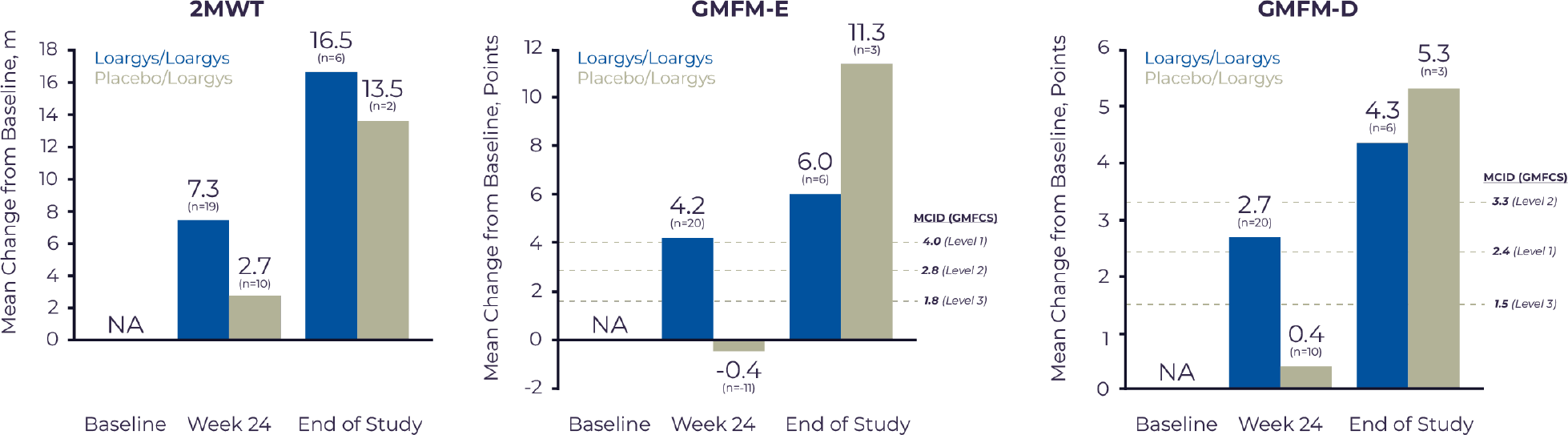
Loargys sustainably improved functional mobility
At study completion, the median exposure to Loargys, excluding the 24 weeks of initial exposure, was 94 weeks (range: 62-152 weeks)5
Sustained and further improved clinically meaningful treatment outcomes demonstrated5
GMFM-E, Gross Motor Function Measure part E; 2MWT, 2-minute walk test; GMFM-D, Gross Motor Function Measure part D; MCID, minimal clinically important difference
Loargys has a manageable safety profile
Hypersensitivity reactions (HSRs)
HSR symptoms includes facial swelling, rash, flushing & dyspnoea1
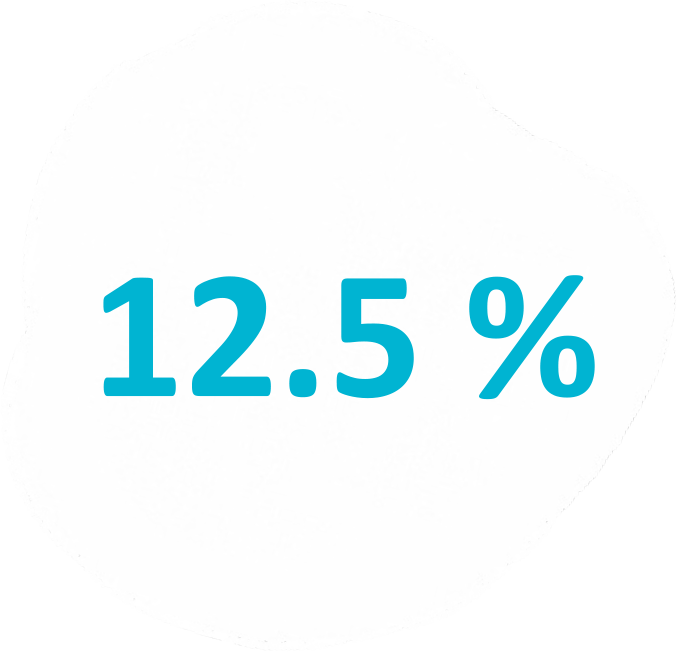
In clinical studies, when administered IV, 12.5% (6/48) of Loargys-treated patients experienced signs and symptoms either consistent with, or possibly related to an HSR11
Injection site reactions (ISRs)
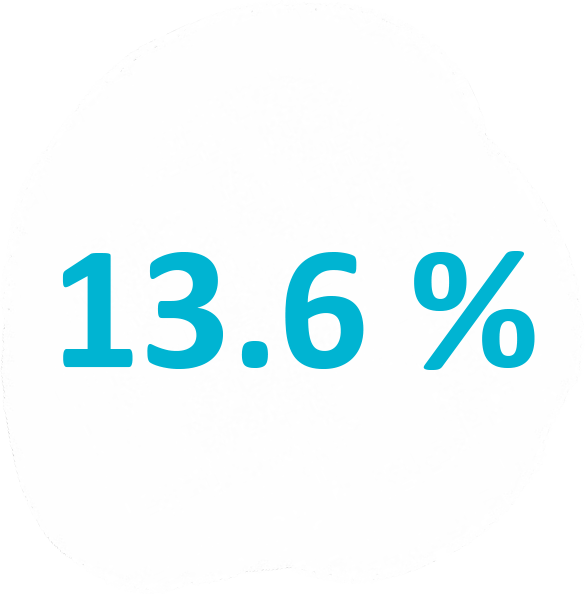
In clinical studies, ISRs (pain, erythema, swelling, irritation and rash at the injection site) were reported in 13.6% (6/44) of Loargys-treated patients after subcutaneous administration1
Immunogenicity
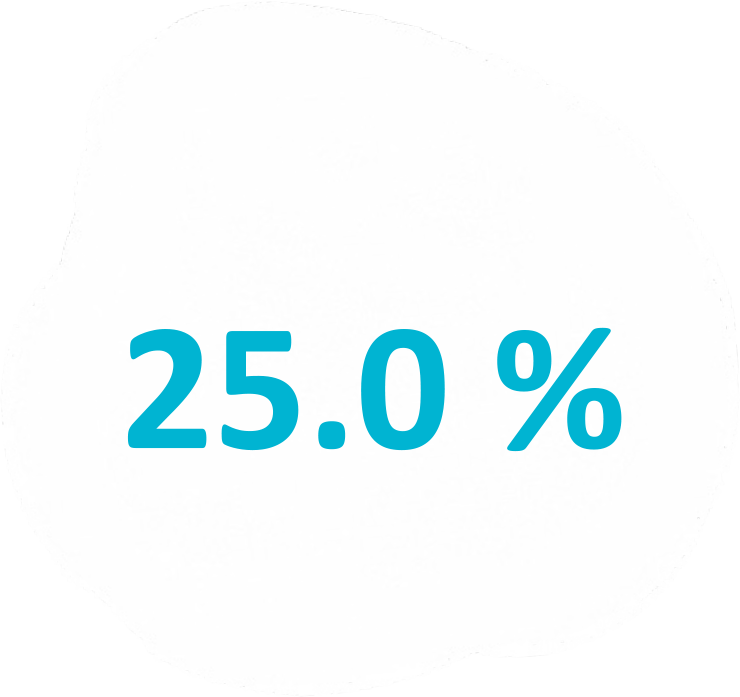
In clinical studies, 25% (12/48) of Loargys-treated patients tested positive for anti-drug antibodies (ADAs)1
The ADAs were transient in nature and resolved during continued treatment1
There were no discontinuations due to AEs across all clinical trials. Hypersensitivity reactions and injection site reactions were mild to moderate in severity and resolved spontaneously or with standard medical care1
HSRs and ISRs were mild to moderate in severity and resolved spontaneously or with standard medical care
Post-marketing
Hypersensitivity reactions were reported, even involving patients treated by subcutaneous administration who were pre-medicated with antihistamines1
Publication
Efficacy and safety of pegzilarginase in arginase 1 deficiency (PEACE): a phase 3, randomized, double-blind, placebo-controlled, multi-centre trial
Loargys Summary of Product Characteristics (Nov 2025)
Diaz GA, et al. Clinical effect and safety profile of pegzilarginase in patients with arginase 1 deficiency. J Inherit Metab Dis. 2021 Jul;44(4):847-856.
Russo SR et al. Efficacy and safety of pegzilarginase in arginase 1 deficiency (PEACE): a phase 3, randomized, double-blind, placebo-controlled, multi-centre trialeClinicalMedicine.2024;68:102405.
Sanchez Russo R et al. Pegzilarginase in Arginase 1 Deficiency: Results of the PEACE Pivotal Phase 3 Clinical Trial PAS4A-2674) . Oral presentation at the SSIEM Annual Symposium, Freiburg, Germany 30 August- 2 September 2022.
Rutsch F et al. Improved clnically meaningful treatment outcomes of pegzilarginase during longer-term treatment: Final functional mobility analysis from the Phase 3 PEACE trial. Poster presented at the SSIEM Annual Symposium, Porto, Portugal 3-6 September 2024
You are now leaving loargys.com and being redirected to ARG1DInfo.com
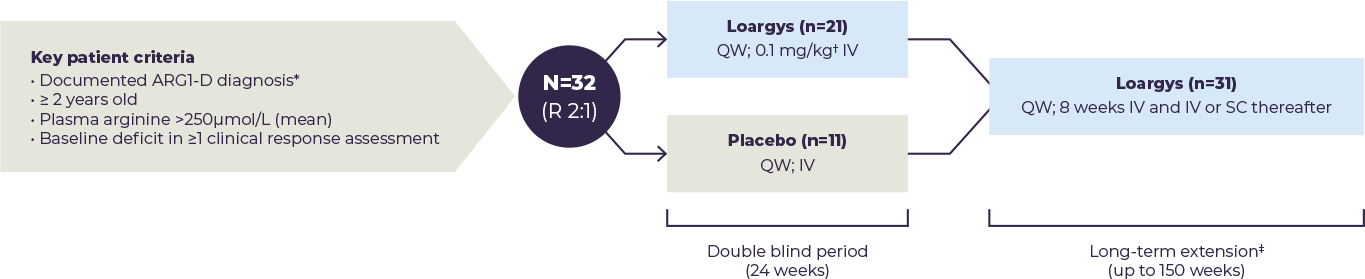
Pegzilarginase Effect on Arginase 1 deficiency Clinical Endpoints (PEACE) wasa pivotal phase 3, randomised, double-blind, placebo-controlled, international study to evaluate the efficacy and safety of weekly Loargys added to standard ofcare management1,2
Efficacy outcomes Primary: plasma arginine reduction Key secondary: GMFM-E and 2MWT Other secondary endpoints included plasma ornithine, guanidino compounds and GMFM-D
2MWT, 2-minute walk test; GMFCS, Gross Motor Function Classification System; GMFM-D, Gross Motor Function Measure part D; GMFM-E, GMFM part E; IV, intravenous; LTE, long-term extension; SC, subcutaneous. *ARG1-D diagnosis was based on elevated plasma arginine, pathogenic ARG1 variant, and/or diminished erythrocyte arginase activity. †Weekly dosing; if needed dose modifications permitted based on plasma arginine levels with maintenance of blinding. ‡Blinding maintained through the first 8 weeks of the LTE.
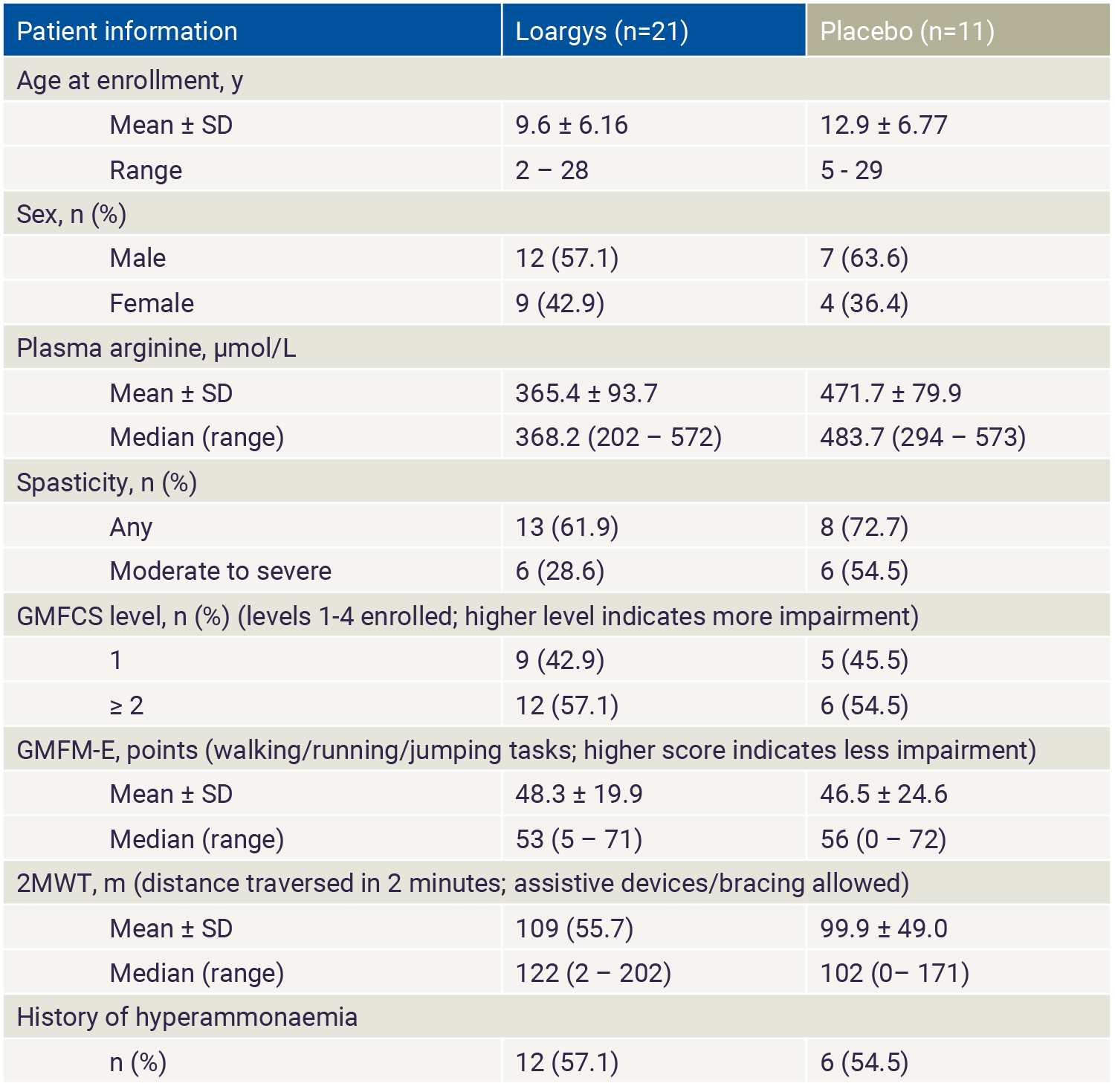
PEACE – patient population
The patient population in PEACE was consistent with the early-phase study cohort, and representative of the wider ARG1-D population1
Are you an EU healthcare professional?
This Immedica website is intended for EU healthcare professionals only and contains promotional content. The product discussed on this website may have different product labelling in different countries.
If you are a US healthcare professional, please visit Loargys.com for US-specific product information.
I confirm that I am an EU healthcare professional.